How to Weigh a Caravan Without a Weighbridge: The Ultimate DIY Guide
You’ve packed the caravan, filled the water tanks, loaded up the fridge, and the family is ready to hit the road. But as you look at your rig, that nagging question pops into your head: "Are we actually legal, or is this thing overloaded?"
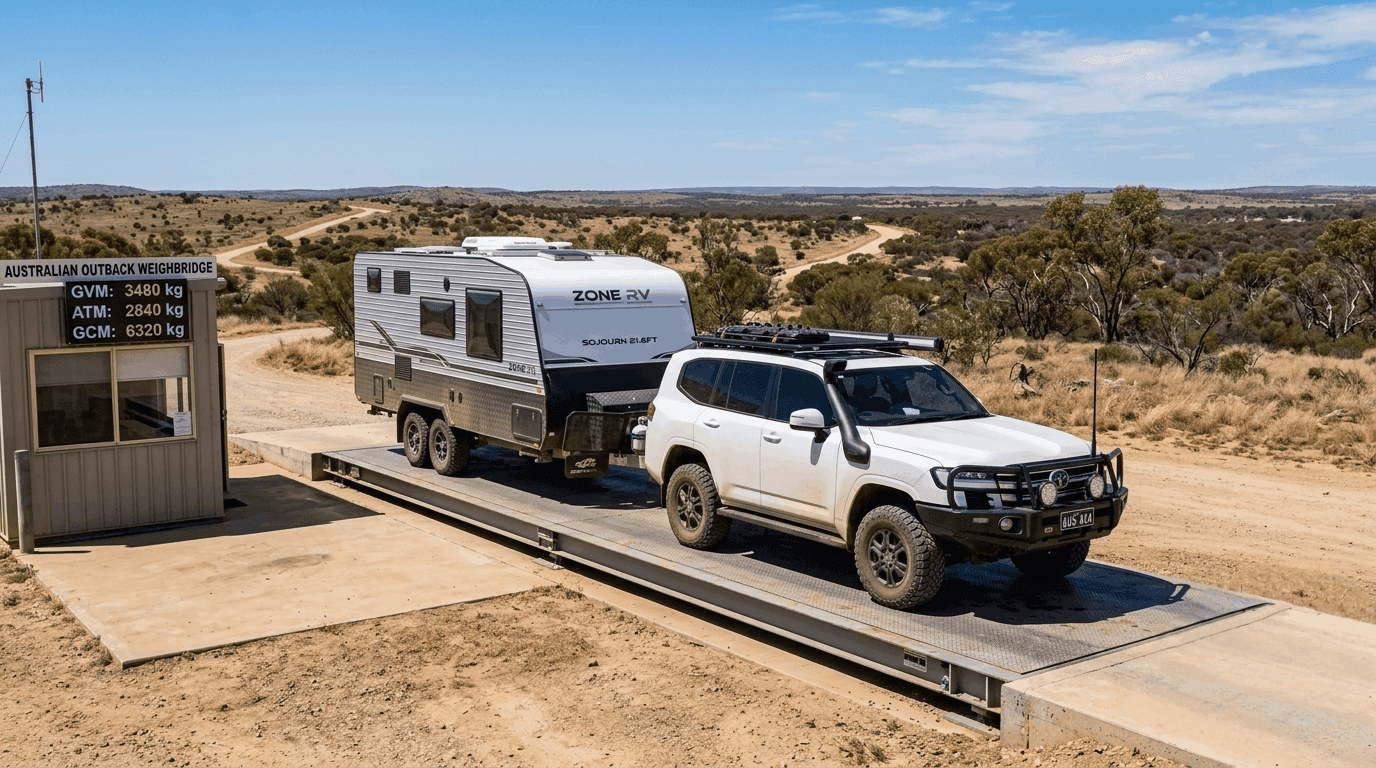
With highway patrol and transport departments cracking down hard on overweight setups, guessing your weight is no longer an option. But let's face reality—public weighbridges aren't always open when you need them, they can be miles out of your way, and sometimes you just want to check your payload while the van is still sitting in your driveway.
If you are wondering exactly how to weigh a caravan without a weighbridge, you are in the right place. In this comprehensive guide, we are going to break down the most accurate, field-tested DIY methods to measure your caravan's weight at home. No expensive commercial scales required. Just simple physics, a bit of inventory management, and a standard bathroom scale.
Why Guessing Your Weight is a Dangerous Game
Towing isn't just about whether your vehicle has the engine power to pull the load. It is entirely about physics, braking dynamics, and chassis limits. When you exceed your caravan's Aggregate Trailer Mass (ATM) or your tow vehicle's Gross Vehicle Mass (GVM), things go south very quickly.
- Compromised Braking: An overloaded caravan pushes your tow vehicle forward. In an emergency braking situation, those extra 200 kilograms can be the difference between stopping safely and rear-ending the car in front of you.
- The Sway Factor: Incorrect weight distribution—specifically having too little or too much weight on your tow ball—is the leading cause of trailer sway. High speeds and a sudden crosswind can send an unbalanced rig into a terrifying, uncontrollable fishtail.
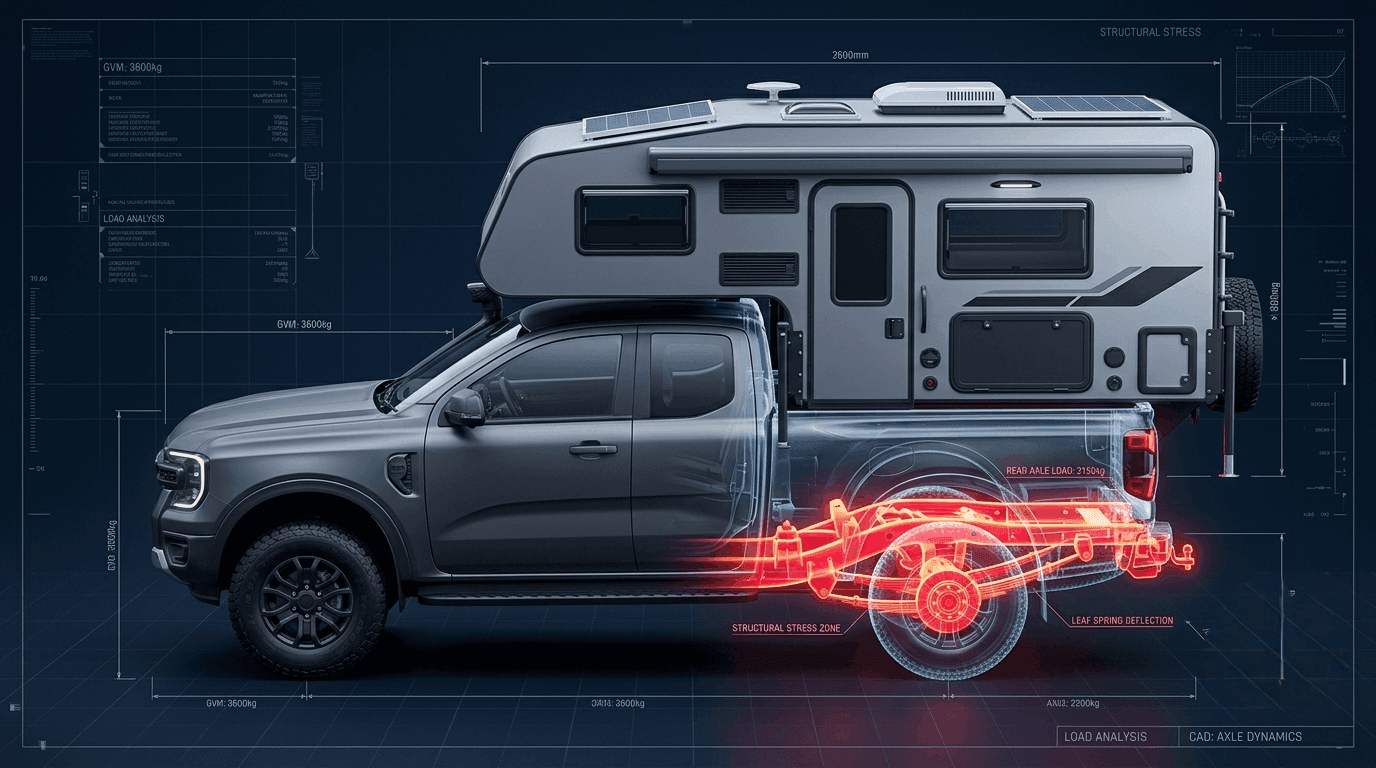
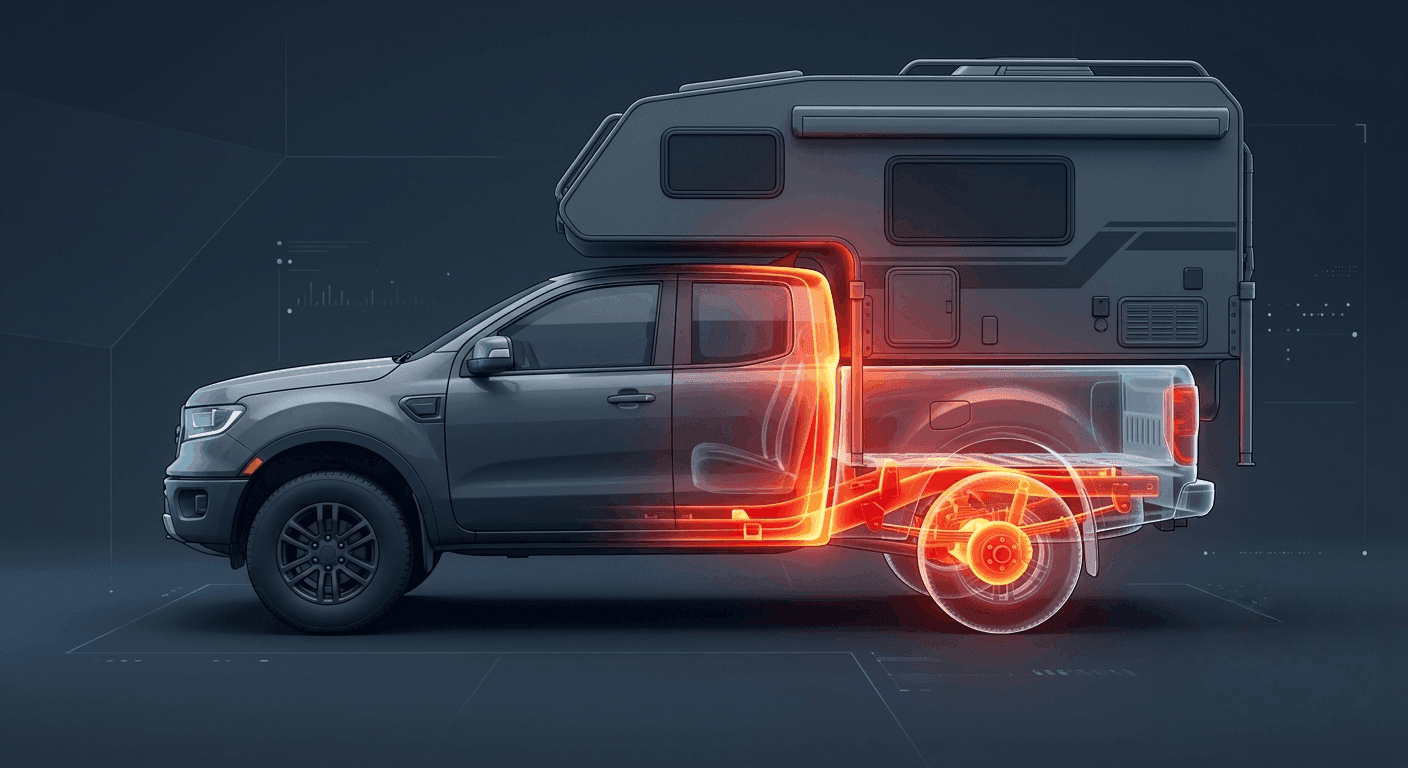
- Structural Damage: Towing beyond limits bends chassis, snaps leaf springs, and destroys transmissions. It’s a fast track to massive repair bills.
- Insurance and Legal Nightmares: If you are involved in an accident and investigators find your rig was overweight, your insurance policy is instantly voided. You are left footing the bill, plus massive fines from the authorities.
The Jargon Buster: Know Your Numbers
Before we start weighing anything, you need to understand what the numbers on your caravan's compliance plate actually mean. Grab a flashlight, look near your door or on the drawbar, and find these figures:
Tare Weight
The absolute empty weight of your caravan straight out of the factory. No water, no gas, no luggage, no aftermarket modifications.
ATM (Aggregate Trailer Mass)
The maximum legal weight of the caravan when it is fully loaded and standing on its own wheels and jockey wheel (unhitched from the car).
GTM (Gross Trailer Mass)
The maximum weight transmitted to the ground by the caravan's tyres when hitched to your tow vehicle.
Payload
Calculated as ATM minus Tare. This is your total allowance for water, gas, food, clothes, and gear.
Method 1: The Inventory Management Approach (Total Weight)
If you work in warehouse logistics, you know that you don't need to lift an entire shipping container to know what it weighs. You look at the picklist, calculate the weight of every single SKU inside, and add it to the container's base tare weight. We can apply this exact same bulletproof logic to your caravan.
This is the most accurate way to determine your total mass without a weighbridge. It requires a bit of effort upfront, but once you build your spreadsheet, you'll know your exact weight for every future trip.
How to execute the inventory method:
- The Harsh Truth About Tare: Factory Tare is often a lie! The number on your plate rarely includes dealership add-ons. If you added a bullbar, second battery, solar panels, or a heavier mattress, you MUST add these to your baseline weight.
- Calculate the Fluids: Fluids are heavy but easy to calculate because 1 liter of water equals exactly 1 kilogram. If you fill two 90L water tanks, add 180 kg. Don't forget the 20L (20 kg) sitting inside your hot water system, and your toilet flush water.
- Calculate the Gas: A standard 9kg gas bottle weighs about 8.5kg empty (the tare weight stamped on the collar). When full, it holds 9kg of gas. So, a full bottle weighs roughly 17.5kg. Got two bottles on the drawbar? That’s 35kg right there.
- Weigh the Gear (The Tedious but Crucial Step): Grab a cheap digital luggage scale. Weigh your camp chairs, the BBQ, your toolkit, the generator, and your annex. Throw your clothes and food in boxes and weigh those too. Add every single item to a spreadsheet.
The Formula: Factory Tare Weight + Fluids + Gas + Gear + Aftermarket Mods = Your Estimated ATM. If this number is higher than the ATM on your plate, you need to leave some gear at home.
Method 2: The Bathroom Scale Hack (Tow Ball Mass)
Knowing your total weight is only half the battle. Your Tow Ball Mass (TBM)—the downward force your caravan applies to the back of your car—is critical for stability. As a general rule, your TBM should be around 10% to 15% of your total loaded trailer weight.
Since a loaded caravan can easily have a tow ball weight of 250kg to 350kg, placing it directly onto a standard bathroom scale will smash the glass. (Note: Do not use a small kitchen scale for this; you need a sturdy Digital Bathroom Scale rated for at least 150kg+). Instead of risking your scale, we use a class-two lever principle to distribute the weight safely.
What You Will Need:
- A standard Digital Bathroom Scale (max capacity 150kg+).
- A sturdy brick or a block of wood (roughly the same thickness as your scale).
- A strong, rigid plank of wood (about 1.2 meters long). A piece of 4x2 timber works perfectly.
- Two small pieces of PVC pipe or wooden dowel (to act as pivot points and ensure accurate weight transfer).
The Setup and Calculation:
CRITICAL: The Jockey wheel MUST be exactly in the center for the math to work.
          [ JOCKEY WHEEL ]
                 |
                 V
   |=============================| <-- 4x2 Wooden Plank
   O                             O <-- PVC Pipes
[SCALE]                       [BRICK]
   |---------- 45cm -------------|----------- 45cm ---------|
   |                                                        |
   |<---------------------- 90cm -------------------------->|
- Find Level Ground: Park the caravan on completely flat, hard ground. Concrete is best. Chock the wheels securely so the van cannot roll.
- Position the Supports: Place the bathroom scale on the ground. Exactly 90cm (900mm) away from the center of the scale, place your brick/wooden block.
- Place the Pivots: Put one piece of PVC pipe on the center of the scale, and the other on the center of the brick.
- Lay the Plank: Rest your strong timber plank across the two pipes like a bridge. Turn the scale on and let it zero out (this removes the weight of the plank and pipe from the final equation).
- Lower the Jockey Wheel: Position your caravan's jockey wheel so it rests on the plank exactly halfway between the scale and the brick (45cm from each side). Wind down the jockey wheel until the caravan is fully supported by the plank, at its normal towing height.
- Do the Math: Because the weight is placed exactly in the middle of your 90cm lever, half the weight goes to the brick, and half goes to the scale. Simply read the number on the scale and multiply it by 2.
Example: If your bathroom scale reads 135 kg, you multiply that by 2. Your actual Tow Ball Mass is 270 kg.
Method 3: Investing in a Portable Tow Ball Scale
If you travel frequently, playing around with planks of wood and bathroom scales every time you load up can get frustrating. For peace of mind, investing in a purpose-built portable tow ball weight scale is highly recommended.
These look like heavy-duty metal cylinders. You simply place it under your hitch, wind down the jockey wheel until the weight transfers to the scale, and read the gauge. They usually cost under $100 and can measure up to 350kg or 400kg. Keeping one in your tunnel boot means you can check your balance anywhere, anytime—especially after refilling water tanks or buying supplies on the road.
Common DIY Weighing Mistakes That Ruin Accuracy
When relying on DIY methods to figure out how to weigh a caravan without a weighbridge, a small oversight can result in massive inaccuracies. Watch out for these common pitfalls:
- Weighing on an Incline: Slopes change the center of gravity. If the nose of your caravan is pointing downhill, your tow ball weight will read artificially heavy. If it’s pointing uphill, it will read light. Always weigh on dead-level ground.
- Ignoring the Weight Distribution Hitch (WDH): WDH systems are fantastic for stability, but the solid steel shank and bars are heavy. A standard WDH can weigh between 25kg and 40kg. If you leave this attached to the car during calculations, you are missing a massive chunk of payload that applies directly to the rear axle.
- The "Tow Tug" Trap: People often spend hours getting their caravan weight perfect, completely forgetting about the vehicle pulling it. The passengers, the fridge in the back, the roof rack, the bullbar, and the tow ball mass all eat into your vehicle’s payload capacity. Your car will likely run out of payload long before it runs out of towing capacity.
Stop Guessing. Start Towing Safely.
Gathering the numbers is just the first step. Making sense of GVM, GCM, ATM, and axle limits is where most people get hopelessly confused. A math error here doesn't just mean a fine; it means putting your family at risk on the highway.
Let Our Tool Do the Heavy Lifting
Why risk a calculation error? We built a free, highly visual tool to take the headache out of payload math. Just plug in the numbers from your vehicle and caravan door stickers, and our calculator will instantly show you a clear Green "Safe" or Red "Overloaded" status.
Launch the Free SafeTow CalculatorFinal Checklist Before You Hitch Up
Learning how to weigh a caravan without a weighbridge isn't just a neat trick; it is an essential skill for anyone serious about towing safely. Before you hit the ignition, make sure you can tick these boxes:
- True Tare weight calculated (including aftermarket mods)
- Tow ball weight measured on flat ground
- Total payload is under the ATM limit
- Tow vehicle payload (GVM) checked and verified
Now hook up and go! Safe travels!